

Report confirms that in-drought support for NFPs is critical to sustainability
- Written by: FRRR
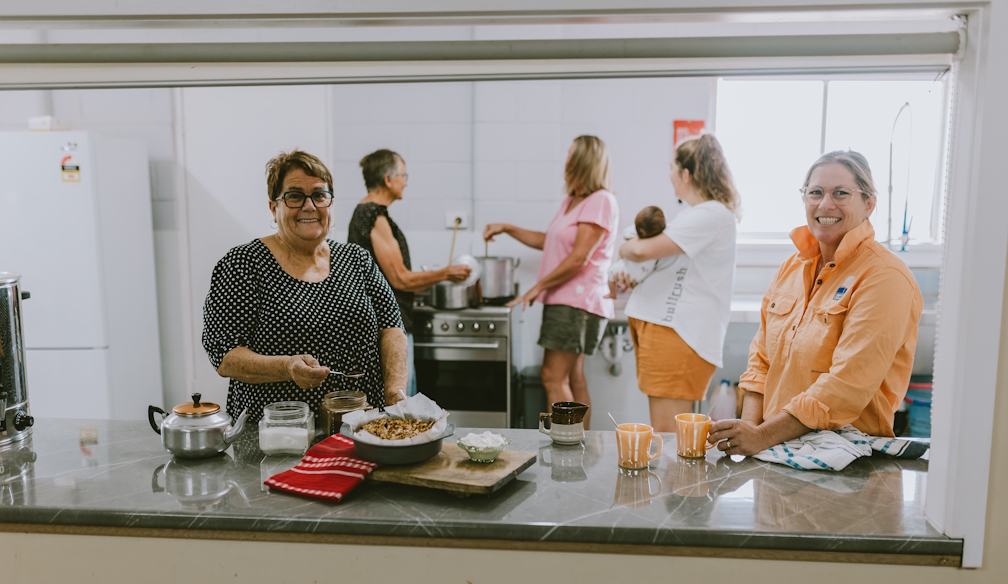
A report commissioned by FRRR into its long-running Tackling Tough Times Together (TTTT) drought support program has found that funding local not-for-profit organisations (NFPs) and community groups and activities that strengthen social capital during drought sustains communities and supports recovery.
The TTTT program ran from 2014 to 2022 and was collaboratively funded by government and philanthropy, awarding $18.6 million via 681 grants. The majority of funding – 84% – went to outer regional, remote or very remote community groups, which often struggle to access other funding. At least half a million people benefited from the program.
The report found there were clear benefits from the projects funded, both during the drought and in the longer-term. The funding helped mitigate the extreme impacts of drought on local people and communities, either directly through investment in human and social capital, or indirectly through built infrastructure investment, strengthening the enabling conditions for short and long-term community vitality.
The review also found:
Locally-based NFPs play a critical role during drought. Investing in strengthening their capacity creates confidence, promotes creativity and cultivates positivity that has positive flow on effects.
Keeping local NFPs strong amplifies the effectiveness and reach of government support during drought. Local groups are known and trusted by the community and able to deliver a range of services including mental health and wellbeing, emergency relief and connection to services.
Supporting community-driven economic stimulation and diversification is critical and pays dividends well beyond the drought – both economically and socially.
Investing in human and social capital to offset the impacts and challenges that drought presents while communities are in-drought is critical. The need is amplified where drought is long-term and further magnified if the community relies on agriculture.
Funding initiatives that strengthen social and professional networks is critical to long-term social cohesion and wellbeing. Events and workshops enhance wellness and social connections, mitigating downstream impacts of drought such as social isolation and decreased metal health.
Investing in infrastructure, such as practical upgrades to meeting places, are critical to the vitality and sustainability of towns, especially small communities. Safe, welcoming spaces enable the critical connections that underpin social cohesion and set communities up for a stronger future.
Philanthropic funding is a powerful activator and lever, allowing for rapid responses to emerging issues and to prove models of support. But it can’t carry the entire burden of support. Collaborative funding through TTTT improved the health and wellbeing of places affected by drought, giving them a sense of hope. In this case, local communities leveraged the grants awarded to deliver more than $40M in projects.
FRRR’s CEO, Natalie Egleton, says that the TTTT program remains a unique grant program in the funding landscape across remote, rural and regional Australia.
“This program is unmatched in terms of supporting regional communities throughout the drought, and to a depth and ease of accessibility when other funding was not readily available. While there were guidelines of course, the program was flexible and allowed community groups to respond to and prioritise what was important in their town.
“Some of the other key learnings were around the importance of having a longer than usual timeframe for groups to deliver the projects, as well as the importance of the funding being available for more than just two or three years. This allowed some places to co-design projects that have had a lasting legacy. Continued support after drought-breaking rain was also critical,” she explained.
This report has reinforced FRRR’s advocacy for funding that is right-sized and tailored to rural communities and grassroots NFPs during drought as an approach that can mitigate the effects of drought on communities, economies and landscapes.
You can read the report online on FRRR’s website.
FRRR is hosting a webinar to share more of these learnings on Thursday 29 August, from 1:00-2:00 pm AEST. Register here: https://events.humanitix.com/tackling-tough-times-together-frrr-webinar.


