Victorians’ commitment to keeping rubbish out of their food and garden organics bin helps boost agricultural sustainability
The small act of keeping rubbish out of food and garden organics bins is having a big impact on Victoria’s sustainable future, particularly for local farmers across the state.
By correctly disposing of their food scraps and garden clippings in their lime green bin and keeping rubbish out, Victorians are playing a vital role in the creation of high-quality compost for community gardens and farms to help grow our food. This also reduces the volume of waste sent to landfill where organics break down and generate harmful greenhouse gases.
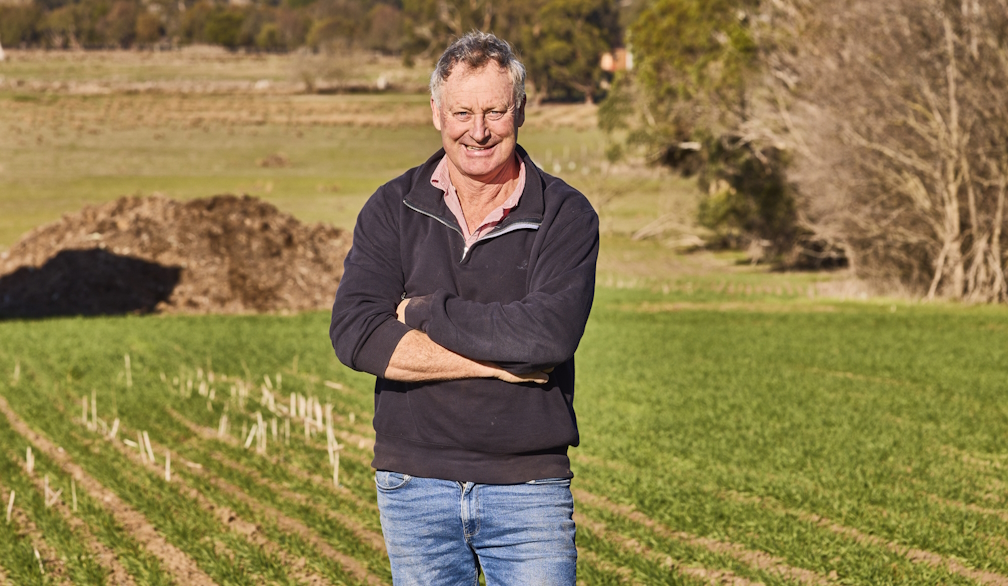
Farmers like Simon Falkiner from Victoria’s Surf Coast Shire Council are already seeing the positive impacts of recycled compost made from the scraps and garden clippings put in food and garden organics bins across Victoria.
For 25 years, Simon and his wife have worked enthusiastically to improve their soils, after reaching a production plateau from the work they did on their topsoil they moved to addressing the constraints found in their subsoil. By injecting a mix of recycled compost and other products, they started the process of transforming what was once a hostile and uninviting place for plant roots to visit to an environment that promotes root growth which enhances healthy and vigorous crop production.
“If we are to use composted urban waste in agriculture to produce clean, healthy food, our urban communities must correctly dispose of the waste they produce – it's as simple as that,” Falkiner stated.
“A healthy soil organic carbon level is essential for crop health. Four years ago, our soil carbon levels at depth were around 0.45% to 0.5%. After applying FOGO compost, to kickstart biological activity, we've boosted those levels to 2%,” he noted. “Increased carbon levels are an essential part of building healthier soils, which in turn leads to better crop resilience, health and yields.”
Research from Sustainability Victoria also shows that three in four Victorians have become more aware of separating food and garden scraps from general waste since the introduction of the food and garden organics bin. Beyond that, 53% of Victorians are motivated to correctly sort their food scraps and garden clippings knowing that Victorian farmers get better quality compost to grow their crops.
“When rubbish is kept out of food and garden organics bins, high-quality compost can be created. This supports Victorian farmers with a valuable resource to help grow our food,” said Paul Murfitt, Director of Regions & Community Action at Sustainability Victoria.
Recycling is changing for the better in Victoria, and this will see the roll out of food and garden organics recycling services across the state by 2030. Councils such as Greater Shepperton, Alpine Shire, Bass Coast Shire, and Warrnambool have already introduced the service.
By keeping rubbish out of your food and garden organics bin, the benefits to regional agriculture will continue to grow.
“If you're unsure what you can put into your food and garden organics bin, it’s important to check your local council website,” Mr. Murfitt advised.
Find out more about why keeping rubbish out of your food and garden organics bin matters by visiting the Sustainability Victoria website.
Research methodology: Sustainability Victoria, FOGO Research Report
-
Commissioned by Sustainability Victoria and conducted by fiftyfive5
-
Sample size: n=755 Victorians
-
All survey participants lived in one of the fifty-three local government areas (LGAs) that offer FOGO collection. Further to this, all participants were required to have their own kerbside FOGO bin in order to participate in the survey.
-
Conducted online between 16th - 28th May, 2024.